
Magnetic Resonance Imaging (MRI) can be quite challenging and scary for pediatric patients, especially young children and infants. The machine’s loud noises and enclosed environment can cause anxiety and fear. Infants and toddlers also may not understand why they need to remain still during the exam. Even the smallest movement can lead to motion artifacts and may require parts of the scan to be repeated. Standard MRI procedures and equipment designed for adults are not always appropriate for young pediatric patients because of their developmental stage and smaller size.
Pediatric MRI uses a combination of different strategies and MRI equipment to help newborns through teenagers have a successful MRI examination. Preparing children for what happens during exams, using properly sized equipment, and creating child-friendly MRI environments can help pediatric patients remain still and calm during their exam.
DISCLAIMER
This article is for general MRI education only. It does not replace official MRI safety training, facility standard operating procedures (SOPs), accreditation requirements, or clinical judgment. MRI procedures should always be performed according to the patient’s specific medical condition and the facility’s protocols.
Pediatric MRI for Infants
MRI exams on infants present unique challenges for MRI teams. The small size and stage of development of infants often require specialized equipment and different patient care techniques. MRI scans for these patients are commonly done while the infant is naturally asleep, avoiding anesthesia if possible. This may mean parents or guardians will keep their baby awake to make them extra tired. Some try to schedule the MRI around the baby’s natural sleep schedule.

Many MRI facilities use a “feed and swaddle” method with their pediatric infants. This method commonly involves having the infant arrive hungry and tired for the appointment. The baby is then fed immediately before the MRI, helping them fall asleep naturally before the examination begins. MR personnel then swaddle the infant before proceeding with the MRI exam.
Some facilities allow parents or guardians to be in the scan room after proper screening. Depending on facility protocol, a parent or MR personnel may remain on the MRI table with the baby or stand immediately beside the MRI table to provide comfort during the examination.
Special pediatric hearing protection such as Dreamies and Neonatal Noise Guards along with earplugs are used to protect hearing. Special immobilizing tools and positioning aids may also be used besides the swaddle. Pediatric MRI coils designed for infants may also be used to improve image quality while maintaining patient comfort.
NICU Infants
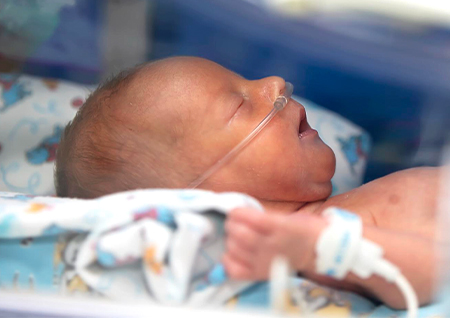
Neonatal Intensive Care Unit (NICU) infants are extremely fragile. Their inability to regulate their temperature can lead to potential hypo- or hyperthermia during a scan. NICU infants also have various monitoring devices, IVs, and breathing apparatuses that cannot come into an MRI without being cleared and labeled as MR Conditional. Some MRI systems specifically designed for neonatal imaging, like the Embrace Neonatal MRI System and the Ascent3T Neonatal MRI System, can help maintain a safe temperature, accommodate complex medical needs, and be located within the NICU.
Pediatric MRI for Toddlers and Young Children
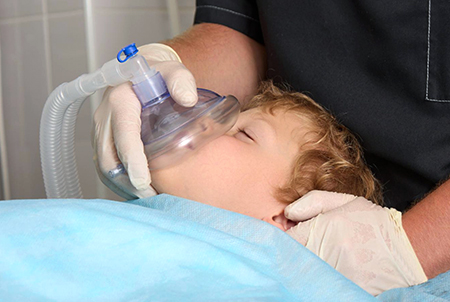
Toddlers and young children can face a wide spectrum of challenges during an MRI exam. Young children may not be able to fall asleep for their exams like infants. They also may not understand the importance of lying still. For some, skipping a nap beforehand can help toddlers be willing to sleep during the exam. Other times, a young child may need to receive sedation or general anesthesia through oral, IV, or gas medications. If sedation or general anesthesia is required, the child may need to fast before the MRI according to the facility’s sedation protocol. A pediatric MRI nurse and anesthesiologist are typically present to administer the medicine and monitor the child through the MRI procedure and recovery period.

Many MRI facilities make their pediatric MRI departments as child-friendly as possible through furniture, décor, and comfort items. The walls, MRI scanner, and ceiling are commonly decorated with fun designs and decals. If a child can lie still watching a show, they may be provided with prism glasses and MR Conditional headsets. Children can also receive certificates and stickers after their exam. Depending on facility protocols, a toddler or young child can take a toy into the scanner if it doesn’t contain any metal. Parents or guardians can also be present inside the MRI room after proper screening procedures.
How a Child Life Specialist Can Help
Depending on developmental age, a child life specialist may be called in. Their job is to help pediatric patients successfully complete their MRI without sedation. A child life specialist can teach children how the MRI works, how lying still helps produce clear MRI images, and the sounds that the MRI makes. This can help children learn to be “as still as a statue”, associate MRI sounds with familiar everyday noises, and have an overall better experience with the MRI. A child life specialist uses models or mock MRI scanners and videos to teach children and answer questions. Additionally, children may receive MRI-themed coloring books to learn in a fun, interactive way.
Parents or guardians can also help children prepare for their exams ahead of time. Children can watch pediatric MRI videos, practicing lying still and following simple instructions, and reading children’s books about MRI exams.
Pediatric MRI for Older Children and Teenagers
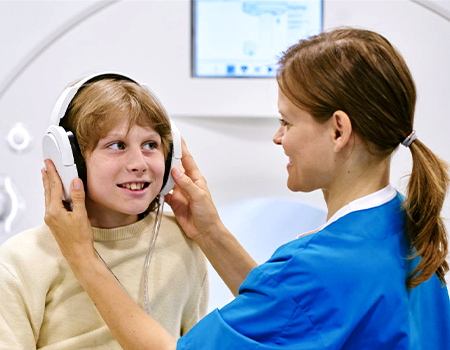
Older children and teenagers do not have as many challenges as younger pediatric patients. However, they still deal with anxiety during an MRI scan. Some of the same methods used for younger children can also be used for older children, such as talking to a child life specialist and watching a show.
These patients can benefit from continuous communication with their MR technologist using MR Conditional communication and patient monitoring equipment. Some older children and teenagers may need to be sedated or under anesthesia to help with extreme claustrophobia and anxiety.
Additional Pediatric Considerations
All pediatric patients and accompanying parents or guardians should be screened for implants and metal. This is so they don’t become injured and implants don’t become damaged. Some pediatric MRI exams require the patient to receive a contrast agent to help certain tissues and blood vessels appear more clearly. It’s best to discuss any allergies, kidney problems, or other medical concerns with the child’s healthcare provider or MRI team before the exam.
Pediatric patients of any age who have extreme claustrophobia or anxiety may be able to undergo an MRI exam on a Wide-Bore or Open MRI system when appropriate. These bore types can help pediatric patients feel less enclosed, which may help reduce anxiety for some children.
As mentioned earlier, pediatric patients could also receive a sedative or general anesthesia if they cannot go through an MRI without moving. New MRI protocols allow for faster imaging techniques and quieter MRI sequences, creating an easier scan for children who can’t hold still long.
Some children with developmental disabilities, autism spectrum disorder, Down syndrome, sensory processing differences, or communication differences can have an even tougher time with scans. These patients may need additional MRI preparations, quiet spaces in the facility, permitted comfort items, or longer appointment times to help alleviate the stress and anxiety that can come from undergoing an MRI scan.
Collaboration between parents or guardians and the pediatric MRI team helps create a successful MRI experience for a child. Helping pediatric patients prepare for their scan, along with using specialized pediatric MRI equipment and child-focused techniques, helps the MRI team obtain the high-quality images they need while providing children with a safe and comfortable MRI experience.
Pediatric MRI Equipment at a Glance
Frequently Asked Questions
Children may have a pediatric MRI exam ordered to help diagnose or monitor injuries, illnesses, or congenital abnormalities with high-quality images without the use of radiation or in addition to other diagnostic procedures.
Some pediatric patients can naturally fall asleep during an exam. Others may stay awake and watch a movie or TV show or need to use some form of sedation or general anesthesia to complete an MRI exam.
Depending on the facility’s protocol, a child may be able to bring a comfort item with them into the exam. Like with toys or stuffed animals, the item must be free of metal before it can enter the MR environment.
Explore Pediatric MRI Products
Comfort and safety are essential for successful pediatric MRI exams. MRIequip carries pediatric MRI equipment and products such as MR Conditional mobility aids, hearing protection, patient comfort products, positioning aids, immobilization equipment, and pediatric MRI room accessories and furniture.