
Imagine an MRI machine. What first comes to mind?
Most may imagine the donut-shaped MRI machine with a narrow tube someone moves into during a scan. The narrow design of some MRI systems can cause anxiety or discomfort for claustrophobic patients. Some patients may worry that an MRI system will not accommodate their size or weight.
However, MRI machines come in more shapes than one to accommodate patient comfort and MRI facility needs. The most common types are Closed MRIs, Wide-Bore MRIs, and Open MRIs. Each type has its own advantages and limitations with different bore sizes and designs. The bore is the opening that surrounds the patient during the scan. The different sizes and designs can significantly affect patient comfort, accessibility, and imaging capabilities.
MRI Options at a Glance
Specifications vary by manufacturer and MRI model. The values above represent common ranges.
Closed MRI: The Traditional Style
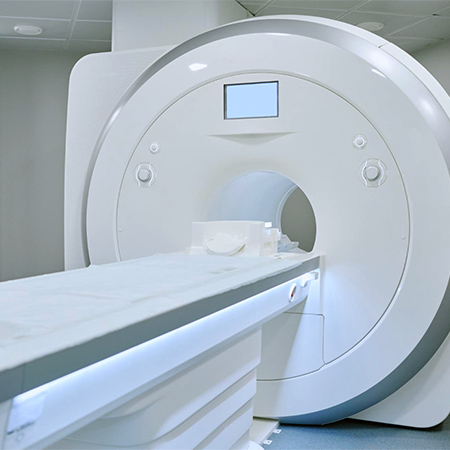
Closed MRI, or Standard MRI, is the type of MRI machine most people think of, and it is the most common bore type used in the industry. These MRI systems have been around the longest and are generally considered the standard for achieving high-quality diagnostic images. The narrow, enclosed bore along with the strong magnetic field of the Closed MRI helps create highly detailed images of organs and delicate parts of the body, such as the wrist, for accurate diagnosis.
Closed MRI systems typically offer shorter scan times because of their higher magnetic field strengths, although scans can still take 15 minutes or longer. Like all MRI systems, a Closed MRI requires patients to remain still during the scan. Even small movements can create image artifacts and may require portions of the exam to be repeated.
The Closed MRI does have its drawbacks when it comes to patient comfort. The narrow bore can cause many patients to have extreme claustrophobia. Some patients may require anesthesia and sedation to comfortably complete an MRI examination. Larger patients may not be able to use a traditional Closed MRI due to size and weight constraints of the machine. The MRI is also very loud, making it more likely for patients to be uncomfortable during the scan.
PROS:
- Higher Tesla (T) output
- High-resolution images
- Condensed footprint
- Faster scan time
- Best for diagnosing conditions with subtle signs
CONS:
- Louder sounds with the higher Tesla rating
- Claustrophobia and patient discomfort
- Unable to work with certain body types and sizes
- Any movement causes image artifacts
Wide-Bore MRI: The Spacious Style

Wide-Bore MRIs have a similar look to Closed MRIs apart from being wider. Closed MRIs are commonly 60 cm in diameter, while Wide-Bore MRIs are 70 cm. The additional 10 cm of bore diameter provides more space and comfort for patients who have claustrophobia, larger-bodied patients, or patients with broader shoulders. The Wide-Bore MRIs also have higher weight capacities compared to Closed MRIs.
Modern wide-bore MRI systems are available in both 1.5T and 3T configurations and can provide image quality comparable to many traditional closed-bore MRI systems. This makes Wide-Bore MRIs a popular alternative for those who have claustrophobia, pediatric patients, or larger-bodied patients. Wide-Bore MRIs are becoming more common in the industry as manufacturers design MRIs for both patient comfort and high image quality in mind.
PROS:
- More comfortable than traditional Closed MRI systems
- Can scan larger patients
- Larger bore opening
- High weight capacities on many models
CONS:
- Larger installation footprint than some traditional MRI systems
Open MRI: Most Accommodating Style
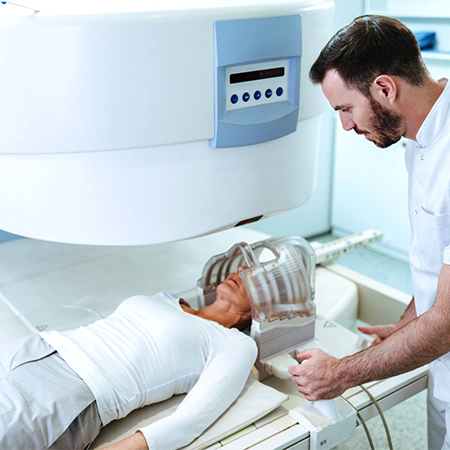
The Open MRI is the most spacious of the three MRI types. There are a few versions of Open MRI systems, but the most common style is a clam-shaped machine. Magnets are set above and below the patient, leaving three sides of the machine open and providing a larger scanning space. The design is considered the most comfortable for patients who have claustrophobia, pediatric patients, those with mobility challenges, and bariatric patients. These types of MRIs are also quieter, as they run at a lower magnetic field strength.
Open MRI systems generally produce lower image resolution than most Closed and Wide-Bore MRI systems. Depending on the examination being performed, image quality may be sufficient for diagnosis, but some studies may benefit from higher-field MRI systems.
Commonly, the magnets for Open MRIs are permanent magnets and have field strengths around 0.2T to 1.2T, much lower than Closed and Wide-Bore MRIs. If higher image resolution is required, an Open MRI may not be the best option. The lower magnetic field strength often requires longer scan times to acquire the images needed for diagnosis.
PROS:
- “Open” design
- Ideal for accessibility and accommodations
- Best for patient comfort needs
- Quieter
- Easier patient monitoring and communication
CONS:
- Lower image resolution than many Closed and Wide-Bore MRI systems
- Longer scan time
- Not appropriate for all MRI exams
Which is the best MRI Bore Option?
Short answer: It depends.
When comparing Closed MRI vs Wide-Bore MRI vs Open MRI, the best option depends on the imaging requirements, patient comfort needs, and MRI facility capabilities. The majority of MRI exams are performed on Closed MRI systems because they offer high image quality, high magnetic field strengths, and efficient scan times. However, a patient may need to use a different bore type if the Closed MRI system is not right for them.
Improving Patient Comfort During MRI Exams
Not all facilities carry Open and Wide-Bore MRIs besides the Closed MRI, but various MRI patient comfort items such as hearing protection, positioning aids, patient monitoring systems, and transport equipment can help make a scan more comfortable for patients. Anesthesia and sedation can also be used to help patients scan more comfortably in a Closed MRI system.
MRI technology has evolved significantly since the development of the first full-body scanners. Learn more about the discoveries and advancements that shaped modern MRI in our article on the history of MRI.
Frequently Asked Questions
Children can undergo MRI exams in Closed, Wide-Bore, and Open MRI systems, depending on the type of exam being performed and the image quality required. Wide-Bore and Open MRI systems may be more comfortable for some children because they provide additional space and can help reduce feelings of claustrophobia. In some cases, sedation or anesthesia may be used to help a child remain still during the exam.
MRI scan times vary depending on the body part being examined, the number of images required, and the MRI system being used. Many MRI exams take between 15 and 60 minutes, though some specialized studies may take longer. Higher-field MRI systems can often acquire images more quickly than lower-field systems.
Many body parts can be scanned using an Open MRI system, including joints, the spine, and some soft tissues. However, certain examinations may require higher image resolution than an Open MRI can provide. In these cases, a Closed or Wide-Bore MRI may be recommended to obtain the image quality needed for diagnosis.
Explore MRI Patient Comfort Items
Patient comfort in any MRI bore type is essential for the best image quality. MRIequip carries a wide variety of patient comfort items from positioning aids and hearing protection to patient monitoring systems that are designed to reduce anxiety and help patients remain comfortable throughout an MRI examination.