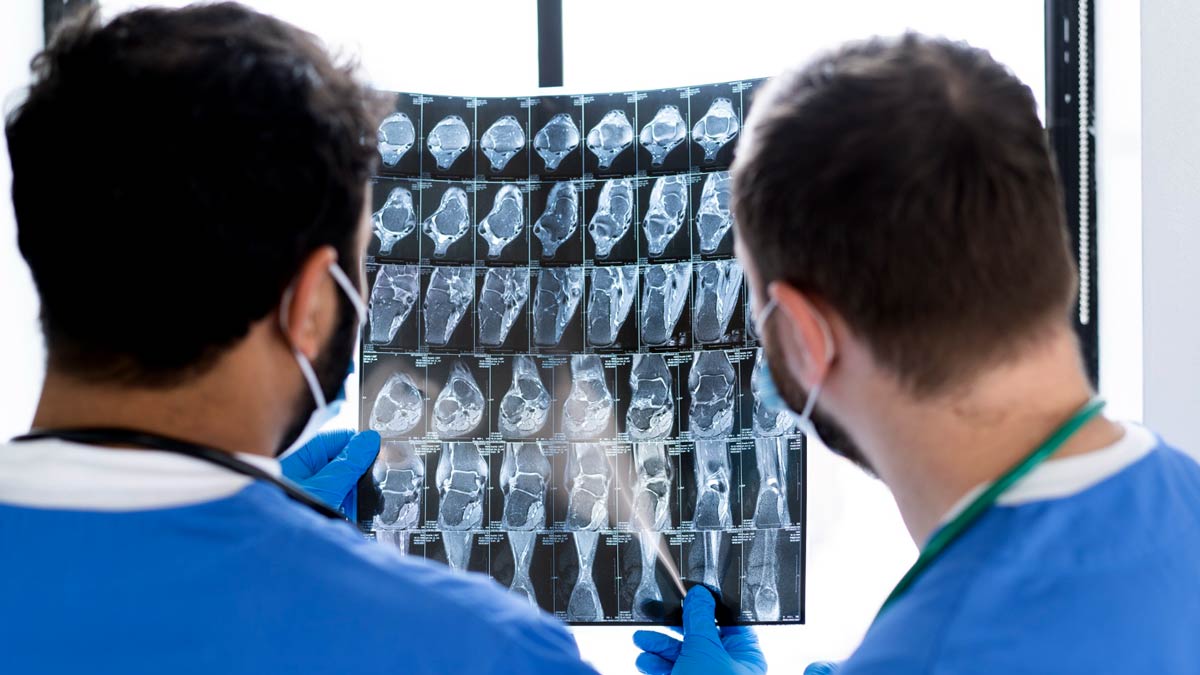
After your healthcare provider orders an MRI, who performs the MRI?
Most of the time, the patient would only meet their MR technologist. However, the MRI team consists of several healthcare professionals that work together behind the scenes to help patients have a safe, comfortable, and accurate scan. From preparing patients for their MRI to interpreting the images, each member of the MRI team has a unique role to play.
Depending on the size of the MRI facility, the team can be quite large. The MRI team typically includes MR technologists, radiologists, MRI nurses, and other assistant roles with MRI safety training. They can be classified as Level 1 MR Personnel, Level 2 MR Personnel, or non-MR personnel based on their MRI safety training and responsibilities within the MRI environment.
Learn more about MR Personnel in our blog on MRI safety guidelines for hospitals.
DISCLAIMER
This article is for general MRI education only. It does not replace official MRI safety training, facility standard operating procedures (SOPs), accreditation requirements, or clinical judgment. MRI procedures should always be performed according to the patient’s specific medical condition and the facility’s protocols.
MR Technologist
MR technologists are the members of the MRI team that patients will spend the most time with during their exam. They are responsible for operating MRI scanners and help patients remain as comfortable as possible throughout the examination. However, MR technologists are not the ones to interpret the images they take. Instead, MR technologists work closely with the radiologist who will interpret the images. They work together to obtain the images needed for diagnosis. MR technologists are typically designated as Level 2 MR Personnel through specialized MRI education, safety training, and clinical experience.
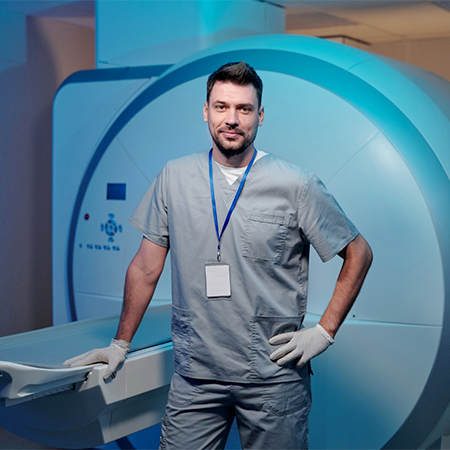
Common roles that MR technologists play include:
- Screening & preparing patients for scans
- Positioning patients for comfort and clear images
- Monitoring & communicating with patients during the scan
- Maintaining MRI safety procedures throughout Zones I-IV
- Administering contrast when required
- Helping reduce anxiety and support patients with claustrophobia
- Selecting the appropriate MRI protocols, coils, and scan parameters
- Verifying MR Conditional equipment is used correctly
- Following facility safety protocols
Radiologist
Radiologists interpret MRI images and prepare diagnostic reports for the referring healthcare provider based on their findings. Some radiologists, known as interventional radiologists, are also specialized in performing MRI-guided surgical procedures and biopsies.
Patients may not meet their radiologist like they do with the rest of the MRI team, but it doesn’t mean the radiologist isn’t present.
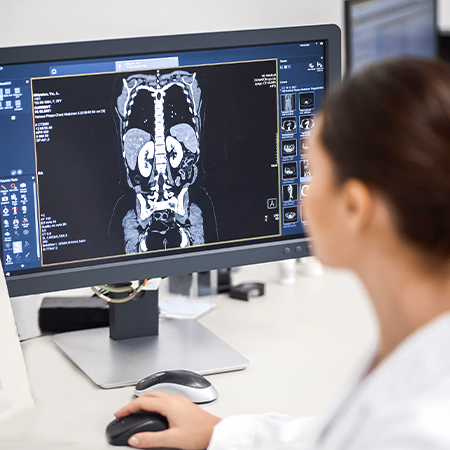
The radiologist works behind the scenes with the MR technologist to ensure the images obtained are appropriate for diagnosis and to communicate their findings to the referring healthcare provider. Radiologists are Level 2 MR Personnel.
The role of a radiologist can include:
- Interpreting and diagnosing images taken by the MR technologist
- Working with MR technologists on the best MRI protocols to use for a scan
- Performing MRI-guided surgical procedures or biopsies if prescribed
- Communicating their findings to the referring healthcare provider through a diagnostic report
MRI Nurse
MRI nurses provide additional patient care before, during, and after certain MRI procedures. These nurses are typically in larger MRI facilities and are the MRI team members that provide additional medical monitoring and support for patients who require it.
Not every MRI requires a nurse to be present. When needed, MRI nurses can administer contrast and assist the radiologist during MRI-guided surgical procedures and biopsies. MRI nurses may also help with transporting and transferring patients when additional medical support is required. They receive appropriate safety training based on their responsibilities and facility policies.

MRI nurses can perform tasks such as:
- Reviewing patients’ medical records
- Preparing an IV for contrast and administering contrast when required
- Assisting with MRI-guided surgical procedures or biopsies if prescribed
- Working with pediatric, critically ill, or medically complex patients
- Monitoring patients’ vital signs during surgical procedures
- Assisting with medical emergencies or allergic reactions
- Administering or assisting with sedation or anesthesia under appropriate protocols
- Providing additional medical support when transporting and transferring patients when required
Additional Roles
The MRI team extends farther than the three previously listed, each additional healthcare professional helping to support patient care, workflow, and MRI safety.
Patients typically talk to MRI scheduling staff members first when scheduling their appointment. Scheduling staff would also provide additional patient instructions and verify paperwork before the MRI appointment.
Patient aids, patient transporters, and technologist assistants help MR technologists when a patient needs more support undergoing an MRI, such as those with mobility limitations, anxiety, or claustrophobia.
Anesthesiologists, respiratory therapists, child life specialists, cardiologists, neurologists, or other healthcare specialists may need to be present for specialized MRI procedures or the patient’s medical conditions.
Management safety roles provided by the MR Medical Director, MR Safety Officer, and MR Safety Expert oversee the MRI safety program and help ensure MRI safety policies and procedures are followed.
How the MRI Team Works Together at a Glance
Step One
The patient’s healthcare provider orders the MRI.
Step Two
MRI scheduling staff contacts the patient to set up an appointment.
Step Three
After checking in, the MR technologist screens and prepares the patient for the scan, with a nurse assisting if required.
Step Four
The MR technologist performs the MRI examination, then sends the images to the radiologist.
Step Five
The radiologist reviews the images, then writes a diagnostic report to send to the referring healthcare provider.
Step Six
The referring healthcare provider reviews the radiologist’s report and discusses the results with the patient.
Frequently Asked Questions
Most licensed healthcare providers who have prescribing authority can order an MRI. These healthcare providers can be your primary care provider, a physician specialist (doctors specializing in a specific healthcare field), a nurse practitioner, or a physician assistant.
Not every member of the MRI team needs to be a Level 1 or Level 2 MR Personnel. Scheduling staff members and patient transport personnel can be non-MR personnel with annual job-specific training.
Certain patients require additional monitoring or specialized care during an MRI. For example, children, critically ill patients, patients receiving sedation or anesthesia, or those undergoing MRI-guided procedures may require support from MRI nurses, anesthesiologists, respiratory therapists, or other specialists.
Supporting MRI Teams with MR Conditional Equipment
Each member of the MRI team helps patients have the best care, comfort, and support possible while undergoing a scan. MRIequip offers MR Conditional transport equipment, patient comfort items, MRI procedure items, MRI respiratory items, MRI office supplies, and more to support MR personnel and enhance patient care.