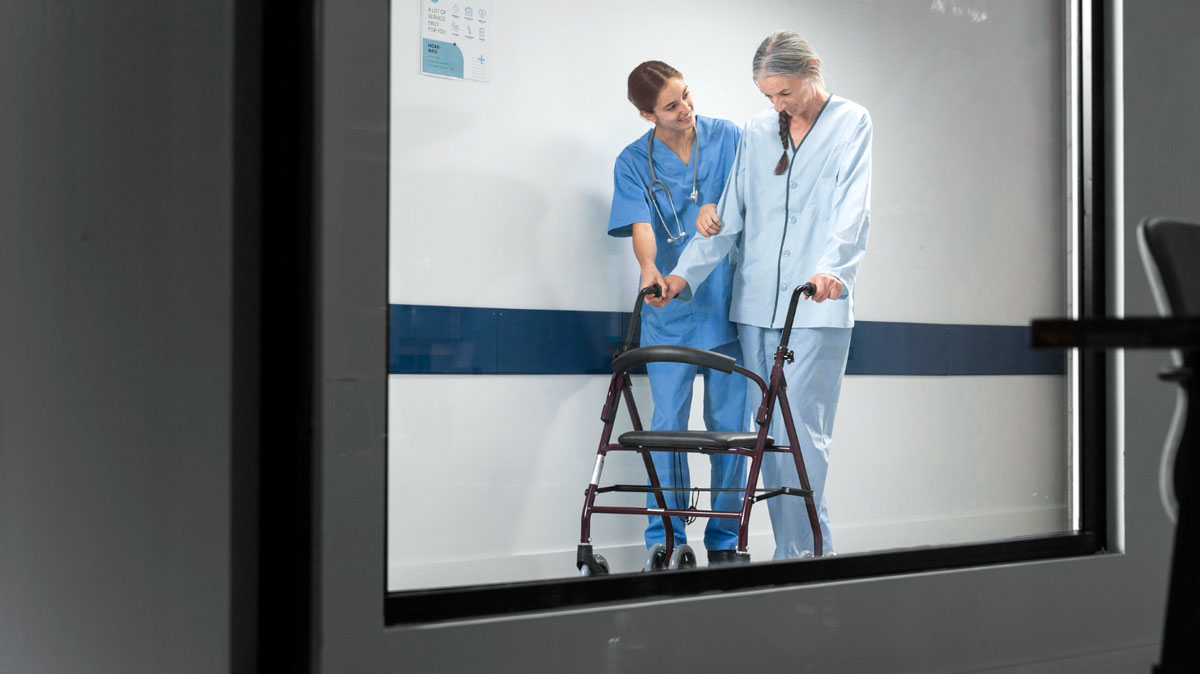
Safe patient transfers are a critical part of MRI safety, patient care, and timely scan turnovers. Each patient needs different forms of assistance to enter the MRI room and onto the scan table. The transport method used depends on the patient’s ability to bear weight, overall weight, mobility level, and clinical condition.
Patient transfer practices in MRI environments are similar to those used in other healthcare settings. The difference is that MRI staff use MR Conditional transport equipment to avoid hazardous situations within the MRI magnetic field.
Traditional wheelchairs, stretchers, and mobility aids are commonly constructed of ferromagnetic materials that can become dangerous projectiles when brought into the MRI environment. MR Conditional transport equipment is constructed of non-magnetic and non-ferromagnetic materials to help create a safer MR environment.
Using MR Conditional patient transfer equipment can help improve patient comfort, support staff safety, and reduce workflow interruptions during imaging procedures. MR Conditional wheelchairs, transfer chairs, stretchers, walkers, canes, and transfer boards are available for various patient transport and transfer needs.
DISCLAIMER
This article is for general MRI education only. It does not replace official MRI safety training, facility standard operating procedures (SOPs), accreditation requirements, or clinical judgment. MRI procedures should always be performed according to the patient’s specific medical condition and the facility’s protocols.
MRI Safety Screening Before Patient Transfers
Before MRI patients are transported into the MRI suite, they should undergo standard MRI screening procedures. Screening protocols usually include the patient completing an MRI screening form, removing ferromagnetic objects from the patient, verbally reviewing the screening questions, and the patient passing through a ferromagnetic detection system when required by facility procedures.
Transport equipment should also be checked for its MRI safety labeling, as MR Unsafe equipment can become dangerous projectile hazards inside the MRI environment. Facilities should follow established MRI screening procedures for patients, visitors, and equipment before entering MRI Zones III and IV.
Transfer Boards, Gait Belts, and Step Stools
Many patient transfer procedures in the MRI suite use additional tools to support patient and staff safety. Tools such as step stools, gait belts, and transfer boards are commonly used in MRI suites to support patient handling procedures while following MRI safety protocols.
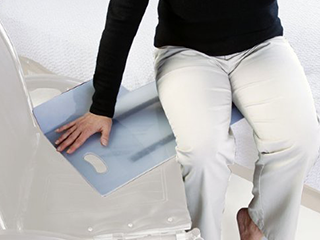
Step stools help weight-bearing patients get on and off the MRI scan table. Many MR Conditional stools include handrails for extra stability. Gait belts help MRI staff assist patients during transfers and provide additional stability for patients using walkers or rollators. Transfer boards allow MRI staff to move patients who cannot assist with transfers from wheelchairs or stretchers to the scan table.
Walkers, Canes, and Rollators
There are times when a patient can walk on their own to the scan. Other patients may be able to bear weight and walk short distances but still require additional stability assistance. MR Conditional walkers, canes, and rollators are ideal for senior patients, pediatric patients, or patients with balance issues to walk safely to their scans.
Depending on the patient’s needs, a gait belt is used for added assistance. MRI staff should always follow facility transfer protocols and patient handling guidelines during assisted transfers.
Wheelchairs and Transfer Chairs
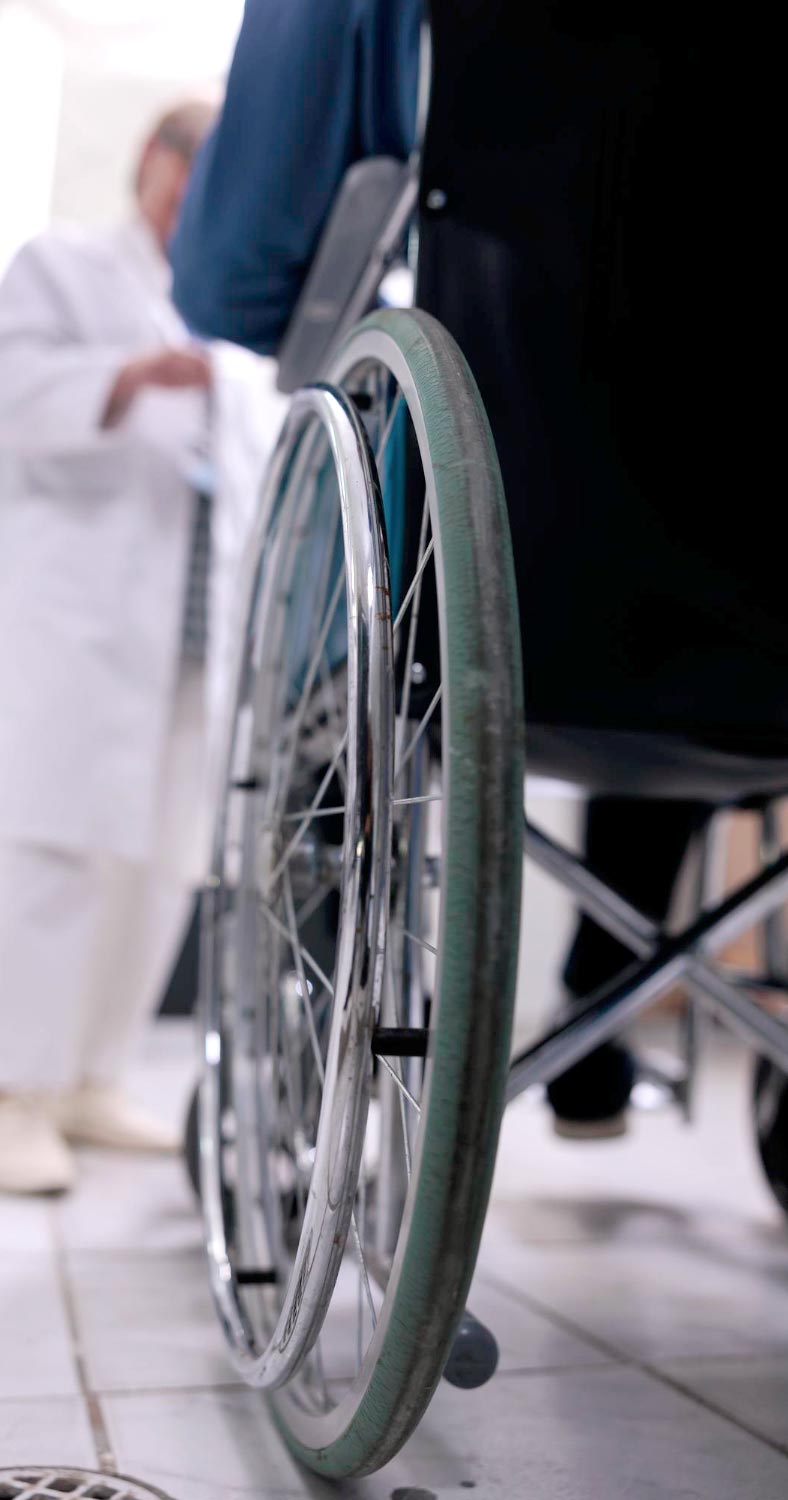
Wheelchairs and transfer chairs are among the most common MRI patient transport methods besides stretchers and gurneys. They are best for patients with lower mobility and those unable to bear much or any weight on their own. Patients who can sit upright and weigh less than the manufacturer’s listed weight capacity can potentially be transported by wheelchair or transfer chair based on clinical assessment and facility protocols. Many MRI wheelchairs and transfer chairs have detachable footrests and armrests that allow for easier transfers.
Common MRI Wheelchair Transfers
Common transfer methods may include standby assistance, assisted standing pivots, slide board transfers, and multi-person assisted lifts based on patient mobility and facility protocols. These methods generally require the wheelchair to be positioned near the scan table, the wheels locked, and armrests and footrests detached or flipped away to make the transfer as streamlined as possible.
Standby Assist Transfers
Standby assist transfers may be appropriate for patients who can independently bear weight while following MRI staff instructions. Typically, the patient would move from the wheelchair to the scan table under MRI staff supervision. Step stools and gait belts may also be used according to facility procedures.
Assisted Standing Pivot Transfers
Assisted standing pivot transfers may be used for patients who can partially bear weight but still require physical support during transfers. This method is easiest with an adjustable-height MRI scan table, making the transfer safer and more comfortable for patients and MRI staff.
Slide Board Transfers
Slide board transfers may help reduce lifting requirements when transferring non-weight-bearing patients between surfaces of similar height. MR Conditional slide boards are commonly used between wheelchairs and MRI scan tables when appropriate for the patient’s condition and facility procedures.
Two-Person Assisted Lifts
Two-person assisted lifts may be necessary for patients who cannot bear weight or when other transfer methods are not appropriate. Facilities should follow established patient handling procedures, MRI staff safety guidelines, and clinical assessment protocols during these transfers.
Stretchers and Gurneys
Stretchers and gurneys are commonly used for low mobility patients over the weight limit of wheelchairs, patients unable to sit upright independently, unconscious patients, and those with spine or head injuries.
Unlike wheelchairs, the height of various stretchers and gurneys can be adjusted to match the height of the scan table. Some patients can move from the gurney to the scan table on their own, but others need assistance for a safe transfer.
Transfer boards are often used to transfer a patient from one flat surface to another when appropriate for the patient and facility procedures. Patient transfers involving stretchers and gurneys may require multiple trained staff members depending on the patient’s condition, mobility level, and facility safety protocols.
Specialized transfer procedures and additional clinical precautions may also be necessary for patients with spine, head, or other serious injuries.
Reducing Risk During MRI Patient Transfers
Choosing the appropriate MR Conditional patient transport equipment can help reduce potential magnetic hazards in the MR environment while also promoting patient safety and staff efficiency. Using additional patient handling tools can help MRI staff reduce transport-related risks to patients and staff members alike.
MRI departments should ensure staff members follow facility-specific MRI safety policies, patient handling procedures, and equipment manufacturer guidelines during all patient transfers.
Frequently Asked Questions
MRI screening helps identify potentially hazardous ferromagnetic objects, implants, devices, and equipment before they enter restricted MRI areas. Proper screening supports patient, visitor, and staff safety.
Depending on the patient’s mobility and clinical condition, MRI staff may use wheelchairs, transfer chairs, stretchers, gurneys, transfer boards, gait belts, and step stools during patient transport and transfer procedures.
The transport method depends on factors such as the patient’s mobility level, ability to bear weight, overall weight, medical condition, and facility transfer protocols. MRI staff assess each patient individually and follow facility protocols to determine the safest transport and transfer approach.
Explore MRI Patient Transfer Equipment
MRIequip offers a wide selection of MRI wheelchairs, stretchers, walkers, rollators, transfer boards, and patient transfer accessories designed to support safe and efficient MRI patient handling procedures.